
Building bridges to Brazil.
Connecting your business to new markets.
The New Treaty Is In Force: What Happens Now for Brazil and Europe?
EU–Mercosur agreement 2026, Brazil Europe trade deal, Mercosur EU tariff elimination, export opportunities, safeguard mechanisms, agribusiness exports, industry competition, trade compliance, local consultancy importance.
5/1/20261 min read

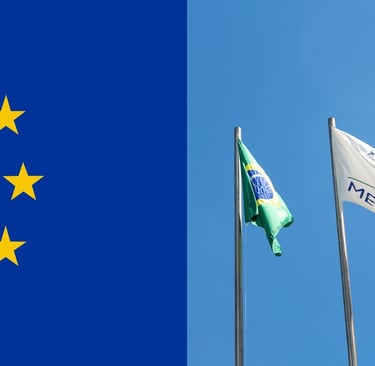
As of May 1, 2026, the long-negotiated EU–Mercosur trade agreement is being applied provisionally, marking a historic milestone for Brazil–Europe relations after more than 25 years of negotiations. This interim deal eliminates tariffs on thousands of products and gradually opens markets between the Mercosur bloc and the European Union. It creates one of the largest free-trade regions in the world, reshaping trade flows, economics, and strategic ties on both sides.
Under the agreement, tariffs on 80–90% of Brazilian exports to Europe are being reduced or eliminated in a phased approach, immediately benefiting agribusiness, minerals, and industrial goods. Brazilian exporters now gain more predictable access to a market of over 700 million consumers, while European firms see lower tariffs on cars, machinery, pharmaceuticals, and other manufactured products. At the same time, safeguard mechanisms have been established to protect sensitive sectors—especially in EU agriculture—from sudden import surges.
Brazil’s agribusiness sector stands to gain significantly with premium access for beef, soy, poultry, and other commodities to the European market, potentially increasing export volumes and foreign exchange earnings. European firms will find expanded markets for high-value goods and greater access to raw materials crucial for green and digital transitions. Both sides benefit from enhanced services trade, investment facilitation, and public procurement opportunities, catalyzing joint ventures and cross-border value chains.
Successfully navigating this new era of Brazil-Europe trade requires more than understanding tariff cuts. Businesses must interpret complex rules, certification protocols, and safeguard systems. Local consultancy becomes a strategic asset, helping companies optimize compliance, assess risk, adapt supply chains, and identify niche opportunities arising from the agreement. With expert guidance, firms on both continents can translate the treaty’s framework into concrete growth and competitive advantage